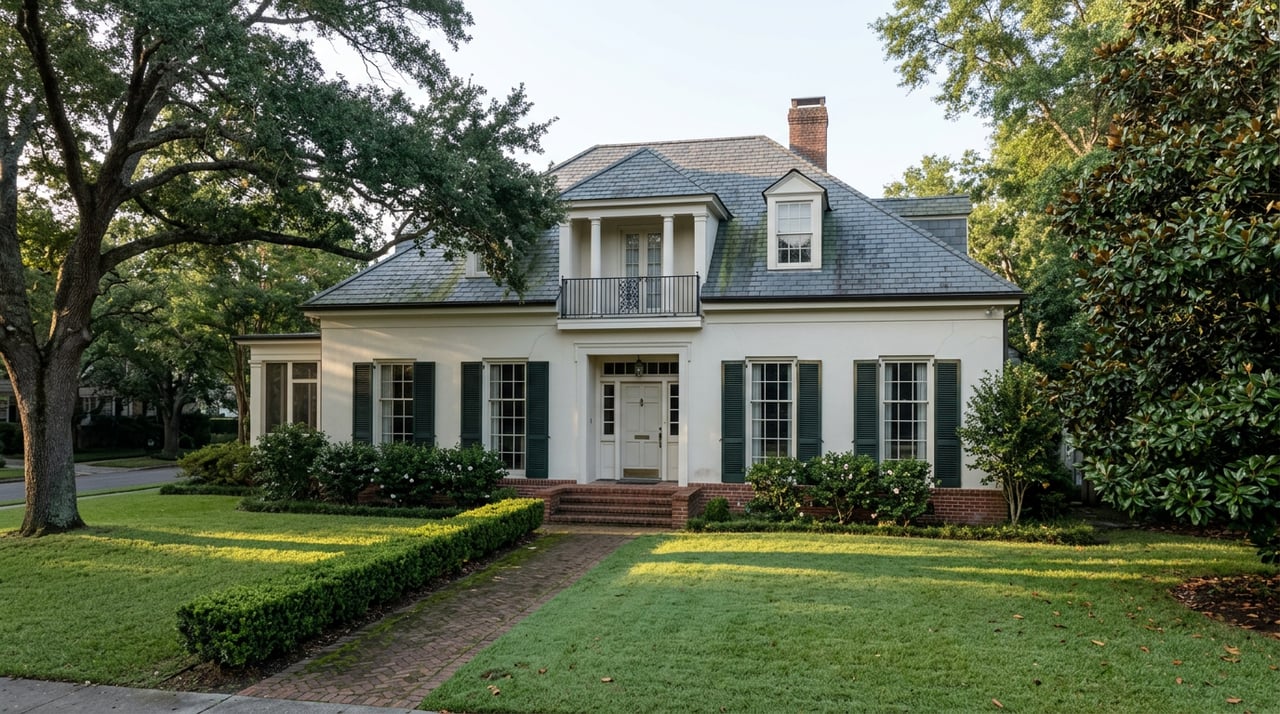
601 Metairie Road Has Had Three Names Since 2022. The Street Never Blinked.
September 17, 2026
September 17, 2026
"The barcar was known as the social phenomenon between work and home." That's how Nick Hufft described the bar he now runs at 601 Metairie Road, a building that has spent most of the last four years being renamed. First it was a neighborhood watering hole. Then it was a white-tablecloth rooftop concept. Now it pours dry-aged burgers and espresso martinis under a different flag entirely. If you've lived in Old Metairie through all three versions, you've probably stopped trying to remember which name goes with which era. That's fine. The building was never really the point. What it proves about the street around it is.
For decades, the building at 601 Metairie Road was Metry Cafe & Bar, the kind of low-key corner spot that outlasts trends by not chasing any. In 2022, four locally connected partners, Fat Boy's Pizza owner Gabe Corchiani, Saints general manager Mickey Loomis, Times-Picayune/Advocate and Galatoire's owner John Georges, and hospitality veteran Mickey Parenton, bought the property and gutted it into Parish Line Bistro Bar, complete with Jefferson Parish's first rooftop dining deck. It opened in October 2022 with a New England-inflected menu built around a lobster roll that regulars still bring up.
Less than two years later, Parish Line closed and reopened as Barcar, this time under Hufft Marchand Hospitality, the group behind Junior's on Harrison and Gail's Fine Ice Cream in Lakeview. The handoff happened in August 2024, and Barcar is still the name on the door as of this writing.
| Era | Name | Approximate Run | Character |
|---|---|---|---|
| Legacy bar | Metry Cafe & Bar | Decades, through 2022 | Corner neighborhood watering hole |
| Local investor buildout | Parish Line Bistro Bar | Oct 2022 – Aug 2024 | Upscale, New England-inspired, rooftop debut |
| Current operator | Barcar | Aug 2024 – present | Casual, cocktail and sports-forward, dry-aged burger |
Three names, three concepts, and the ownership never once left a small circle of people who already had roots in Old Metairie or in New Orleans hospitality more broadly. That's the detail worth sitting with. This wasn't a building that got flipped to an out-of-state group testing a market. It stayed local at every turn.
Look past the signage and the building itself barely moved. The 1940s masonry shell stayed. The rooftop deck, still the only one of its kind in Metairie, stayed. What changed was tone. Parish Line leaned into fine dining with a raw bar and a curated wine list. Barcar dropped the pretense and built a menu around a burger, oysters, and a TV wall for game days. The shift wasn't a step down. It was a correction toward how people on Metairie Road actually spend an evening: post-errand, post-shopping, looking for a drink and a bite rather than a reservation and a wine pairing.
That's a pattern worth naming, because it shows up again almost immediately with a business that has nothing to do with 601 Metairie Road at all.
Kenji Kazoku opened at 2929 Metairie Rd on April 29, 2026, a sister concept to downtown's well-regarded Kenji Omakase, built by chef Matthew Nguyen and former NFL wide receiver Malachi Dupre. It launched as a dry-aged, Toyosu-sourced sushi bar with grilled wagyu and an indulgent cocktail list, the kind of downtown-caliber concept you'd expect to find next to its sibling Kenji Omakase on Camp Street rather than out on a suburban commercial strip.
By late summer, local food coverage was already describing a retooled version of the place. New partners, Logan and Paris Jean, had come on board, and the menu had shifted toward something more approachable and everyday, with the full dry-aged omakase experience scaled back to once a week instead of nightly. In other words, a concept that took Parish Line almost two years to soften into Barcar took Kenji Kazoku about five months to soften into a neighborhood sushi spot.
If you're trying to read the corridor correctly, that's the tell. Metairie Road doesn't reject new money or outside concepts. It just doesn't let them stay fancy for long. Whatever lands here gets pulled toward the same register: casual, repeatable, built for regulars rather than special occasions.
Set against that turnover is a set of fixtures that haven't budged in years. The Old Metairie Farmers Market runs the second Saturday of every month at Bayou Metairie Park, 2713 Metairie Road, from 8:30 to 12:30. The next few dates on the books are:
Every March, the Old Metairie Irish Festival takes over the block around Gennaro's Bar on Metairie Road, timed to the Friday before the St. Patrick Parade of Jefferson, a parade that has run down Metairie Road since 1971. Restaurants come and go along this strip in a matter of months. The market and the parade have been anchoring it for decades.
Put the two timelines side by side and the picture sharpens. The businesses on Metairie Road change fast, sometimes twice in two years at the same address. But the ownership behind those changes rarely comes from outside the community, and the concepts that do land here get reshaped, quickly, into something more neighborhood-scale than they started as. Meanwhile the things that give the street its actual rhythm, a monthly market in a park, an annual parade route, a rooftop that keeps getting reused rather than torn down, haven't moved in years.
That's not a story about instability. It's a story about a corridor with a strong enough identity that it bends new money toward itself instead of the other way around. If you've watched three names cycle through 601 Metairie Road and felt like the street itself never changed, that instinct is correct. It's also, as far as neighborhood signals go, a pretty rare thing to be able to say about a strip this close to a growing metro.
If you're curious what else is happening around Old Metairie, or you're the kind of person who notices when a building changes hands for the third time and wants to know why, that's exactly the sort of local detail Francher Perrin Group tracks block by block. Reach out any time you want a read on the neighborhood that goes beyond the listing photos.
Stay up to date on the latest real estate trends.
From first showings to closing day, we’re committed to delivering a seamless, elevated real estate experience tailored to your goals. Whether you’re buying, selling, relocating, or investing, the Francher Perrin Group is here to guide you with trusted expertise, personalized service, and a deep understanding of New Orleans real estate.
FRANCHER PERRIN GROUP
7934 Maple Street New Orleans, LA 70118 2734 Prytania Street New Orleans, LA 70130