Uptown's Termite Report Passes the House. It Never Looks at the Oak Above It.
September 10, 2026
September 10, 2026
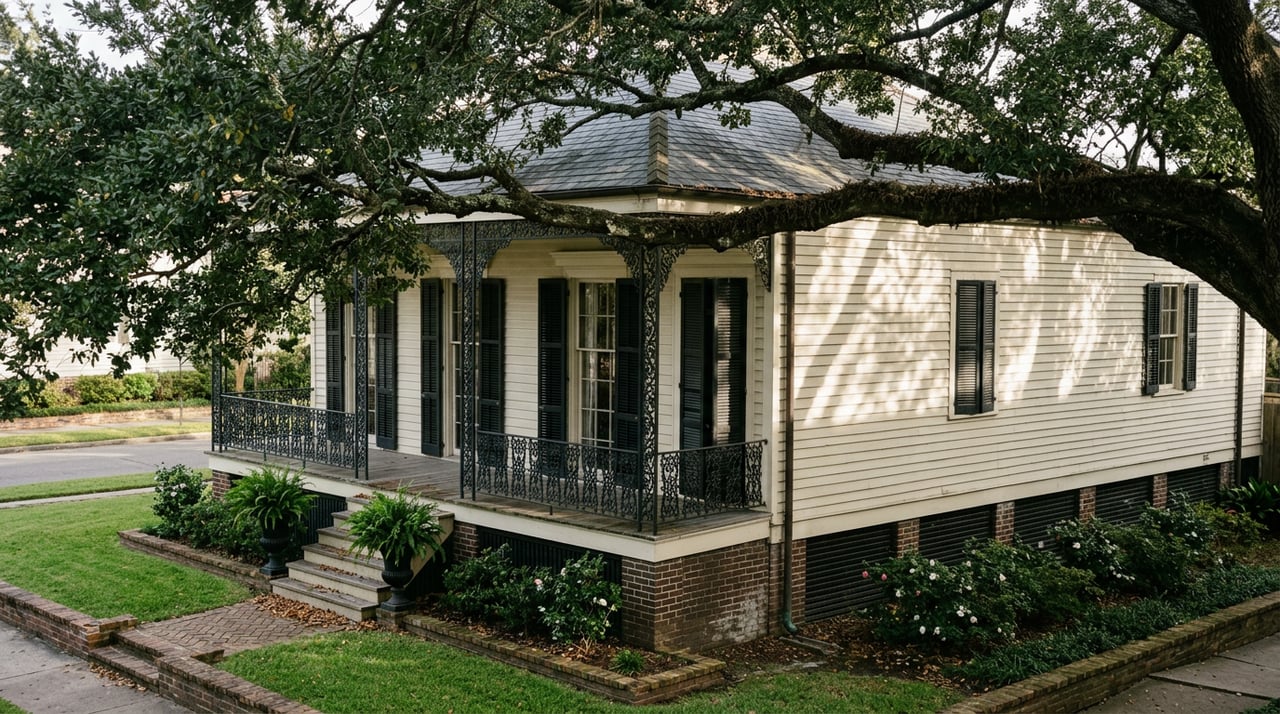
A buyer under contract on a raised center-hall on Constance Street gets the call: the wood-destroying insect report came back clean. No active termites, no visible damage, no treatment history flags. She exhales, signs the closing disclosure, and moves in under a hundred-year-old live oak that shades her whole front yard.
What the report never mentioned, because it was never asked to, is the oak.
That gap is the thing worth understanding before you write an offer on an Uptown home, or list one. The termite inspection required for nearly every Louisiana sale is thorough about the structure and silent about the tree eight feet from the foundation. In a neighborhood built around its canopy, that's not a small omission.
Louisiana requires a wood-destroying insect inspection for most home sales, separate from the general home inspection, performed by a state-licensed pest control professional. The findings go on the state's official form, commonly referred to by pest control companies as the LPCA-143. VA loans require it on every purchase. FHA loans require it too, under HUD's Single-Family Housing Policy Handbook. Conventional loans leave the requirement to the purchase contract, but in a market with Uptown's housing stock, buyer's agents ask for one as a matter of course.
The inspector examines the structure itself: framing, sills, porches, attached decks, anywhere wood is visible and accessible. What the report does not do is evaluate the trees on the lot, the root systems running under the yard, or soil conditions beyond the building's perimeter. It's a structure report. It was never built to answer the question an Uptown buyer actually has, which is whether the thing making the block beautiful is also the thing feeding a colony into the house.
| What the WDIR covers | What it doesn't |
|---|---|
| Visible structural wood (framing, sills, porches) | Trees, root systems, soil beyond the foundation |
| Evidence of past treatment or infestation | Termites living inside walls, under carpets, behind finishes |
| Conditions that invite future infestation (wood-to-soil contact) | Colony activity that hasn't yet reached visible wood |
The cost of the inspection itself is modest, typically in the seventy-five to one hundred fifty dollar range. Who pays is negotiable and spelled out in the purchase contract, though in Louisiana practice it's often the seller's line item.
New Orleans has lived with Formosan subterranean termites since they arrived after World War II, likely on cargo ships returning from the Pacific. They're aggressive, they build colonies with millions of members, and unlike native termites they don't need ground contact to survive once established. They also nest in trees, not just structures, which is where the canopy comes back into the story.
Estimates of how many of the city's live oaks carry termite activity vary depending on who's counting. Some put it around a fifth to a quarter of the city's trees. Other estimates, including one tied to a USDA study, put the figure closer to a third, with some pest control sources pushing that as high as half. The range itself tells you something: nobody has a precise city-wide count, which means the honest answer for any individual property is that the tree needs its own look, not an inference from a citywide average.
Uptown doesn't have the kind of coordinated public response the French Quarter got. Starting in 1998, the federally funded Operation Full Stop program blanketed a fifteen-block area of the Quarter with monitoring stations and bait systems, a response big enough that roughly half the structures there still have bait products installed around their perimeter today. Uptown never got that infrastructure. Termite management on Uptown's live oaks and the homes beneath them is almost entirely a private, per-property responsibility.
That responsibility has shown up in city records before. In 2023, the City removed eight oak trees in front of Sophie B. Wright Charter School on Napoleon Avenue in Uptown, trees that had been in decline for years following unpermitted contractor work back in 2014. A Parks and Parkways representative told local media that termite damage was also a contributing factor to the trees' condition by the time they came down. It's one documented case, not a citywide pattern, but it's a real one, and it happened on an Uptown street.
Local restoration contractors see the residential version of this regularly. One New Orleans remodeling firm, One New Creation, has completed exterior restoration work specifically in the Uptown and Carrollton area addressing termite and moisture damage, the kind of project that starts with a homeowner noticing soft trim or bubbling paint years after a clean sale closed.
A positive WDIR doesn't have to end a deal. Buyers typically have several paths, and which one makes sense depends on how bad the finding is and how much leverage either side has:
The dollar range on the downside is wide enough to matter. A routine inspection catching early activity might mean a treatment cost in the low thousands. Left undetected for a couple of seasons, the same colony can turn into a five-figure repair. Across the greater New Orleans area, residents and businesses spend an estimated three hundred million dollars a year on Formosan termite control and repair combined, which is the scale problem an individual buyer is really trying to avoid inheriting one house at a time.
There's a legal detail that rarely comes up until it matters. Louisiana courts have applied what's known as the manifestation theory to termite damage, meaning the damage is treated as having legally occurred on the date it's discovered, not the date the termites actually did the eating. That timing detail can shift liability toward whoever owned, insured, or treated the property at the point of discovery, rather than whoever owned it years earlier when the infestation actually took hold.
For a seller with an older Uptown home and a treatment history that goes back a decade or more, that's worth understanding before listing. For a buyer, it's a reason to ask not just whether the current report is clean, but when the property was last treated and whether that treatment history is documented and transferable.
Formosan termites in New Orleans typically swarm in the spring, usually starting around Mother's Day and continuing into late June, when winged alates emerge at dusk and head for streetlights. But swarming is a mating event, not the whole threat. The colonies themselves are active underground and inside structures year-round, which means a fall inspection carries just as much weight as a spring one.
Before writing an offer on an Uptown home with mature trees on the lot, it's worth asking a few questions that go beyond the standard report:
None of these questions will kill a good sale. They're the difference between buying a house under a beautiful oak and understanding what that oak actually means for the structure standing next to it.
Does a clean WDIR mean the property is termite-free? It means no visible evidence of activity was found in accessible areas at the time of inspection. It doesn't rule out activity inside walls, under floors, or in trees on the lot, since those fall outside the report's scope.
Who typically pays for the termite inspection in a Louisiana sale? It's negotiable and set in the purchase contract, but in practice it's often the seller's responsibility in this market.
If termites turn up, does that mean the deal is dead? Not usually. Most contracts allow for treatment negotiation, repair credits, price adjustments, or requesting a transferable bond before that becomes necessary.
If you're weighing a purchase or a listing under Uptown's canopy and want a clearer read on what a specific property's history looks like, Francher Perrin Group can walk through it with you block by block. Reach out for a free home valuation or take a look at our buyer's guide before your next showing on a shaded street.
Stay up to date on the latest real estate trends.
From first showings to closing day, we’re committed to delivering a seamless, elevated real estate experience tailored to your goals. Whether you’re buying, selling, relocating, or investing, the Francher Perrin Group is here to guide you with trusted expertise, personalized service, and a deep understanding of New Orleans real estate.

FRANCHER PERRIN GROUP
7934 Maple Street New Orleans, LA 70118 2734 Prytania Street New Orleans, LA 70130