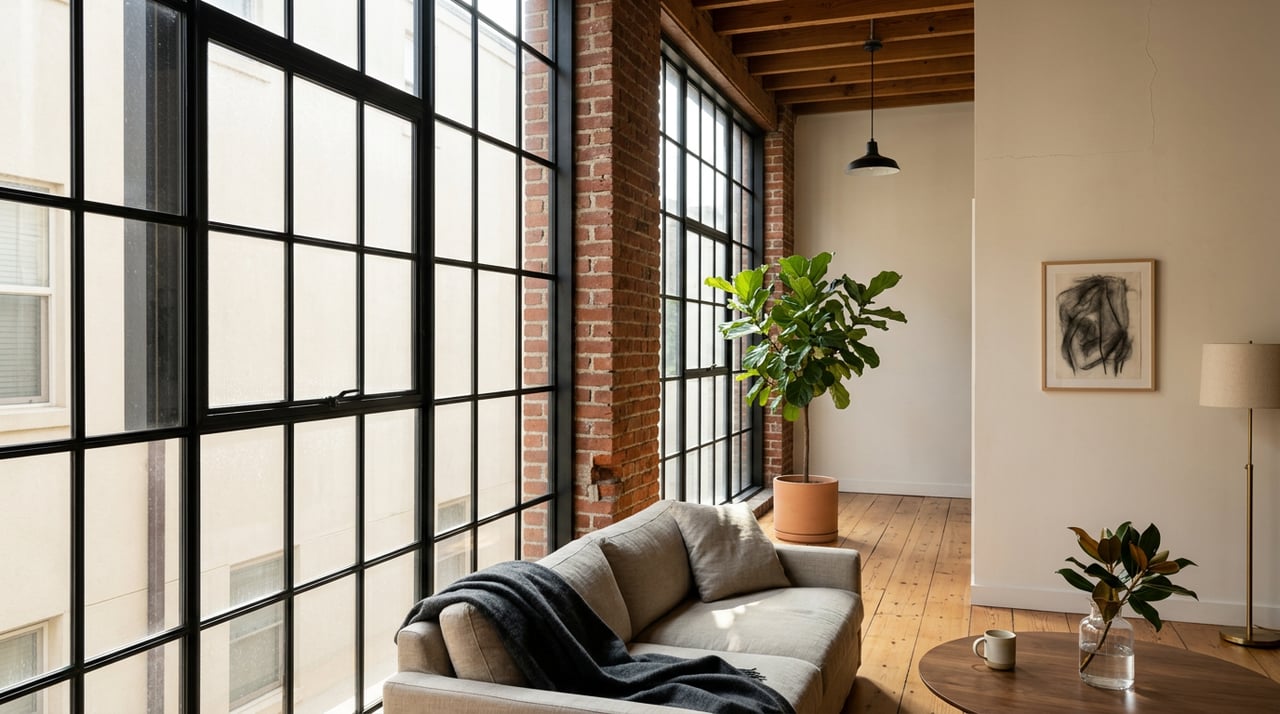
Warehouse District, After the Linen Comes Down: An August Field Guide for People Who Actually Live Here
August 6, 2026
August 6, 2026
The Saturday of White Linen Night, roughly 50,000 people stood between you and your front door. By Tuesday morning, they were gone. What most write-ups miss is what happens next: August is when the Warehouse District belongs to the people who pay rent or a mortgage here.
The neighborhood you walk through this week is not the one you walked through last August. Three restaurants opened within a short radius, a new riverfront corridor stitched the district to Crescent Park for the first time in generations, and the galleries that spent August 1 hosting more than 50,000 visitors are back to a pace where you can actually read the wall text. Here is what changed, and how to use it.
If your muscle memory still routes you to Cochon, Herbsaint, and Pêche when a friend asks where to eat, your muscle memory is out of date. The Warehouse District picked up new addresses in the first half of 2026 that are worth working into the rotation.
None of these replaced the anchors. Emeril's and Meril are still Emeril Lagasse's, Gianna and Herbsaint and Pêche and Cochon are still under the Link Restaurant Group, and Compère Lapin still carries Nina Compton's Creole-Caribbean menu. What shifted is the density between them. A block that had two dinner options in 2023 now has four.
For the twelve hours of White Linen Night, Julia Street runs on adrenaline. For the other 364 days a year, it runs on First Saturdays and whatever exhibition the galleries are hanging at the moment. Both are more useful to a resident than the big August event.
The First Saturday Art Walk is the same organization's original monthly program. Galleries and museums are open all day, with opening receptions from 5 to 8 p.m., and individual gallery hours vary. No dress code. No 40-minute wait for a bar. Just the same rooms with a fraction of the bodies.
What's on the walls through the rest of August is worth walking to see:
The Arts District's Julia Street corridor picked up its "gallery row" identity because of two things that happened within a decade of each other. The Contemporary Arts Center opened at 900 Camp Street in 1976, the 1984 World's Fair drew artists and dealers to the surrounding blocks, and Arthur Roger was among the pioneers who opened a gallery at 432 Julia St. That is why the concentration exists. It is also why walking it on a normal Saturday feels nothing like walking it on August 1.
The most underdiscussed change in the district this year has nothing to do with restaurants or galleries. It is that the river is finally reachable on foot without a workaround.
The Audubon Nature Institute held a ribbon-cutting for Goldring Woldenberg Riverfront Park, which opened April 16, transforming the former warehouse at Governor Nicholls Street wharf into a public green space with landscaping, shade trees, a marsh-themed playground, and an open meeting area called "NOLA Front Porch." For the first time in generations, the project provides continuous public access to the Mississippi River from Spanish Plaza to Crescent Park, spanning nearly 2¼ miles and making it one of the longest contiguous riverfront parks in the country.
Practically, that means a resident on Julia or Camp can now string together a morning walk that runs from the Warehouse District out to Bywater without ever leaving the water's edge. In August, that shade matters. A route that had you crossing four sets of railroad tracks last summer is now a continuous path.
The National WWII Museum has been the district's largest tourist draw for years, which is exactly why residents forget it also keeps changing. Two additions from this spring are worth knowing about, especially if you have out-of-town family coming through:
The newly opened WWII Motor Pool is a dedicated facility for restoring and preserving historic military vehicles, offering a behind-the-scenes look at conservation work, and PT-305 Below Deck Private Tours now let guests explore the interior of the fully restored World War II patrol torpedo boat.
A block away at 818 Howard Avenue, the Museum of the Southern Jewish Experience continues to be one of the district's most quietly ambitious institutions. It relocated to New Orleans in 2021, presenting American South Jewish history from the Colonial era through the Civil Rights movement across 13,000 square feet, and documents Jewish community development in small Southern towns, merchant contributions to regional economies, civil rights activism, and contemporary Southern Jewish identity. An hour there before dinner at Sofia is a real evening.
The story most publications tell about the Warehouse District in summer is White Linen Night. It is a good story. It is also one night. The version residents live is closer to this:
If you bought here for the density of dinner options, the galleries within walking distance, and the historic warehouse conversions that give the district its architectural signature, August is the month you get the highest return on that decision. The rest of the city is at the lake or out of town. Your neighborhood is still here, and it added inventory since last summer.
If August has you thinking about what your Warehouse District condo or loft is worth in the current market, or whether the block's momentum has changed what a purchase here should look like, the Francher Perrin Group works this corner of the city closely. Explore recent listings and neighborhood detail on our CBD / Warehouse District page, or request a home valuation when you are ready for a real number.
Stay up to date on the latest real estate trends.
From first showings to closing day, we’re committed to delivering a seamless, elevated real estate experience tailored to your goals. Whether you’re buying, selling, relocating, or investing, the Francher Perrin Group is here to guide you with trusted expertise, personalized service, and a deep understanding of New Orleans real estate.
FRANCHER PERRIN GROUP
7934 Maple Street New Orleans, LA 70118 2734 Prytania Street New Orleans, LA 70130